
FDA-cleared, guideline-aligned therapy for volitional hand and wrist recovery
What is Synchrony?
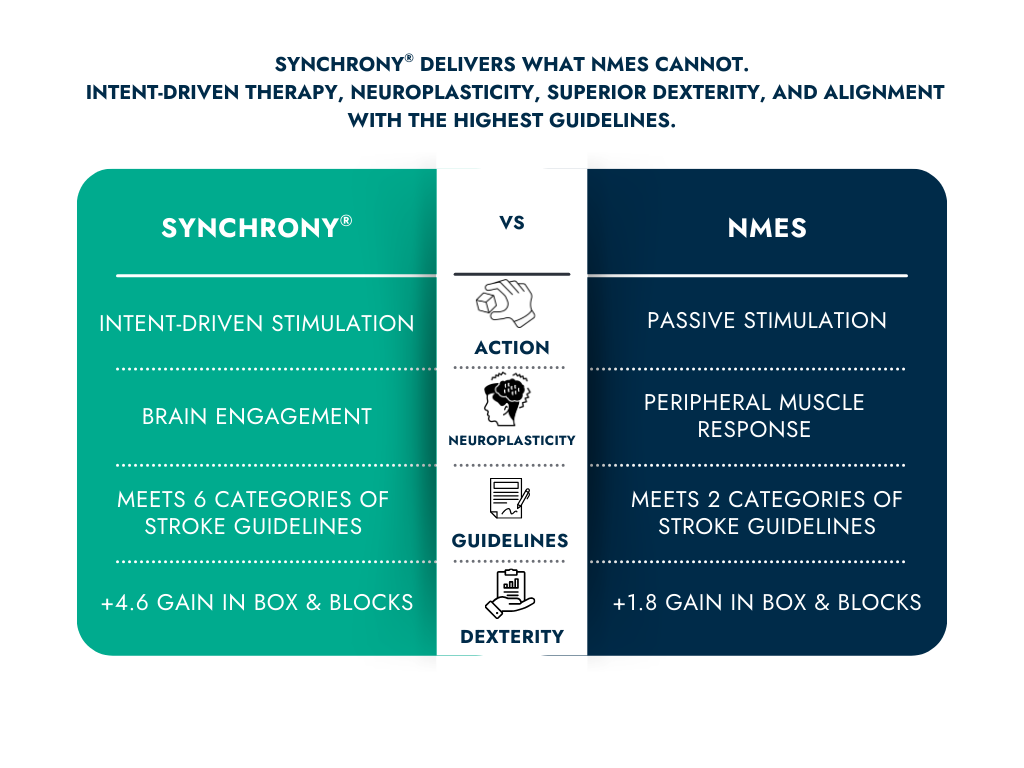
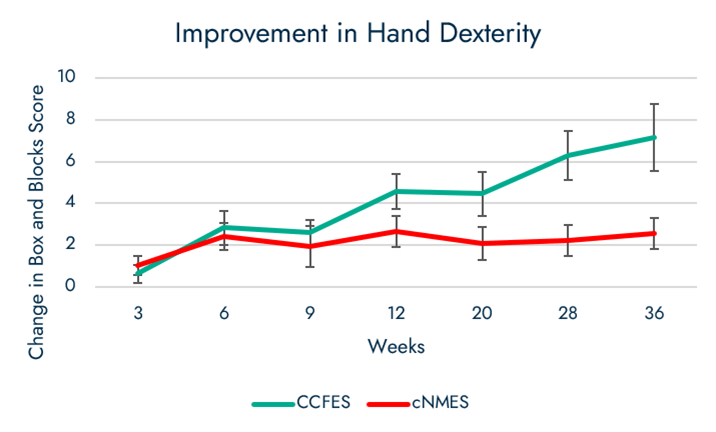
Synchrony is a novel application of functional electrical stimulation that capitalizes on bilateral motor pathways to promote wrist and hand recovery after stroke via Contralaterally Controlled FES (CCFES). CCFES has been consistently found superior to NMES in recovering hand dexterity in both acute and chronic stages after stroke.
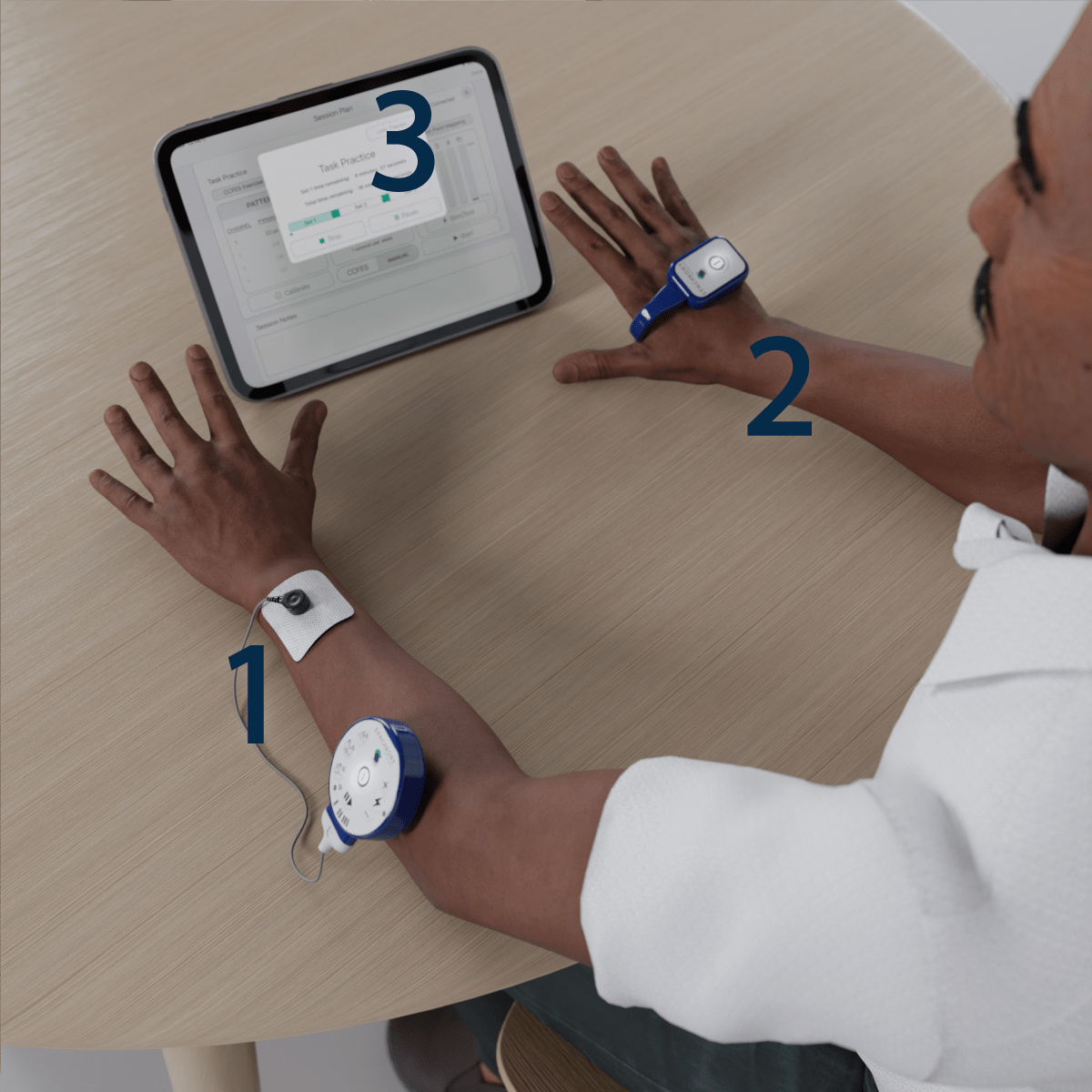
Synchrony can be easily utilized within therapy sessions and go home with the patient, which allows for high-dose, high-repetition functional task practice as recommended by the Stroke Clinical Practice Guidelines. The device is simple to set up, with light-weight equipment that can be donned with one hand while allowing for unimpeded mobility.
Synchrony is intended for use in adult patients (22 years and older) whose paralysis or paresis is caused by upper motor neuron injury (e.g., stroke, spinal cord injury, etc.) by prescription use only.
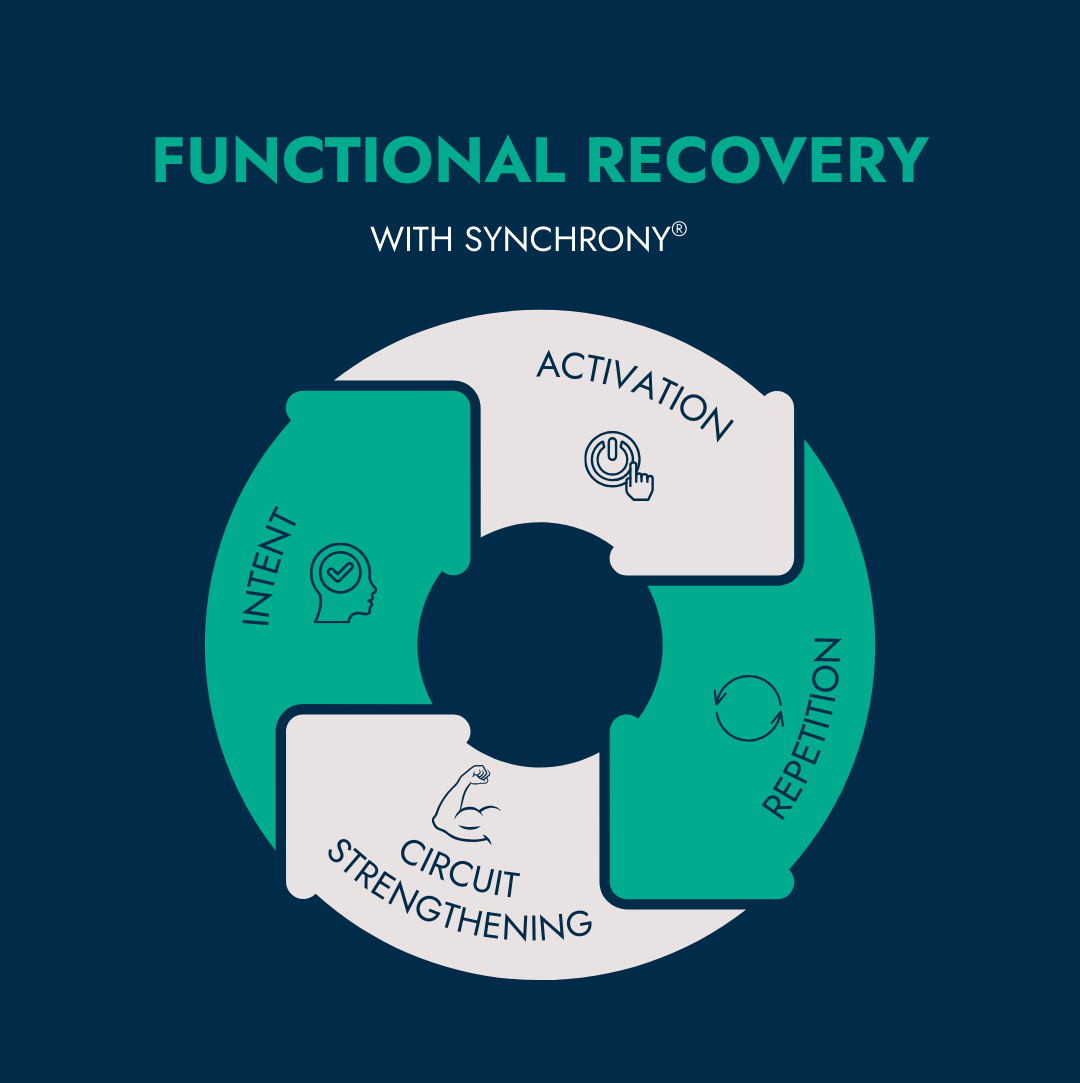
How Synchrony Powers Recovery
Key Features:
-
- Volitional hand opening
- Real-time, proportional stimulation
- Biological intent-based control
Why is it Different?
Research Supports CCFES
20 years of Research-Generated Evidence
- CCFES outperforms conventional NMES in recovering upper extremity function in both acute and chronic phases after stroke.
- Knutson et al 2016, Zheng et al 2019, Xie et al 2024,Halawani et al 2024,Loh et al 2022
- Meta-analyses (2022-2024): CCFES outperforms NMES in Fugl-Meyer, Box & Blocks, active range of motion (AROM) and others
- Xie et al 2024, Halawani et al 2024, Loh et al 2022
- The most prominent results occurred in stroke patients with mild-moderate hand impairment who were between 6-24 months post-stroke, though many outside of these ranges also saw positive improvements
- Knutson et al 2016
Prominent outcome measures most-used in the literature and best able to capture upper extremity (UE) changes because of Synchrony:
- UE FMA (Upper extremity Fugl Meyer Assessment)
- Wrist and finger AROM
- Box and Blocks
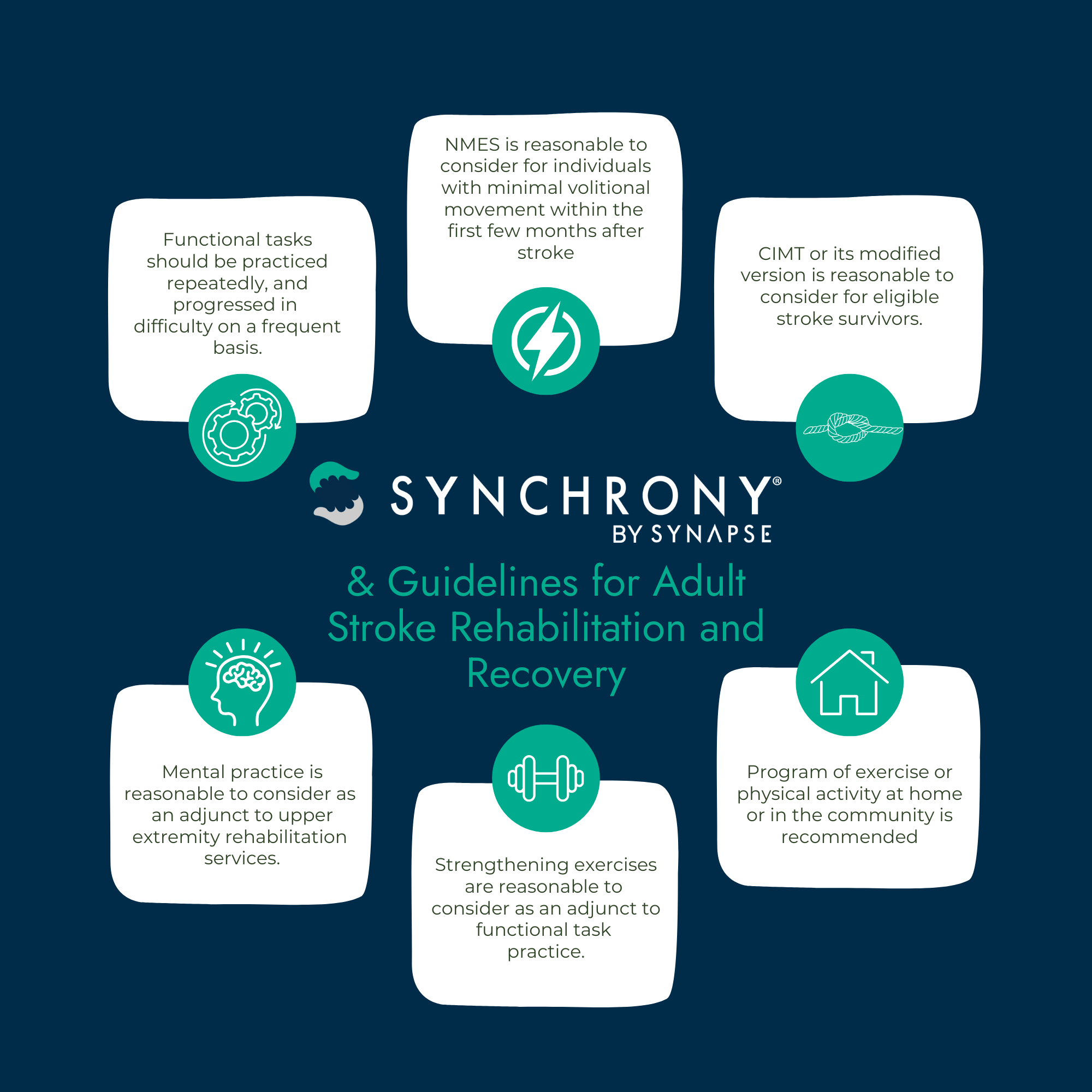
Guideline Alignment: Guidelines for Adult Stroke Rehabilitation and Recovery
- Class I, Level A: Task-specific, high-repetition, progressive therapy
- NMES support (Class IIa, Levels A&B)
- CCFES (Class llb, Level A)
A Multifaceted Approach to Recovery
- Clinic + Home Workflow: Clinician Guided & Self Administered Therapy at Home
- Therapist Benefits: Easy setup, scalable dosing
- Patient Experience: Empowered, volitional recovery